
Seasonal
What to Do With the Pile After a Storm
There is no shelter here. Flat open ground and a long severe-weather season mean wind damage arrives all at once, across whole streets.
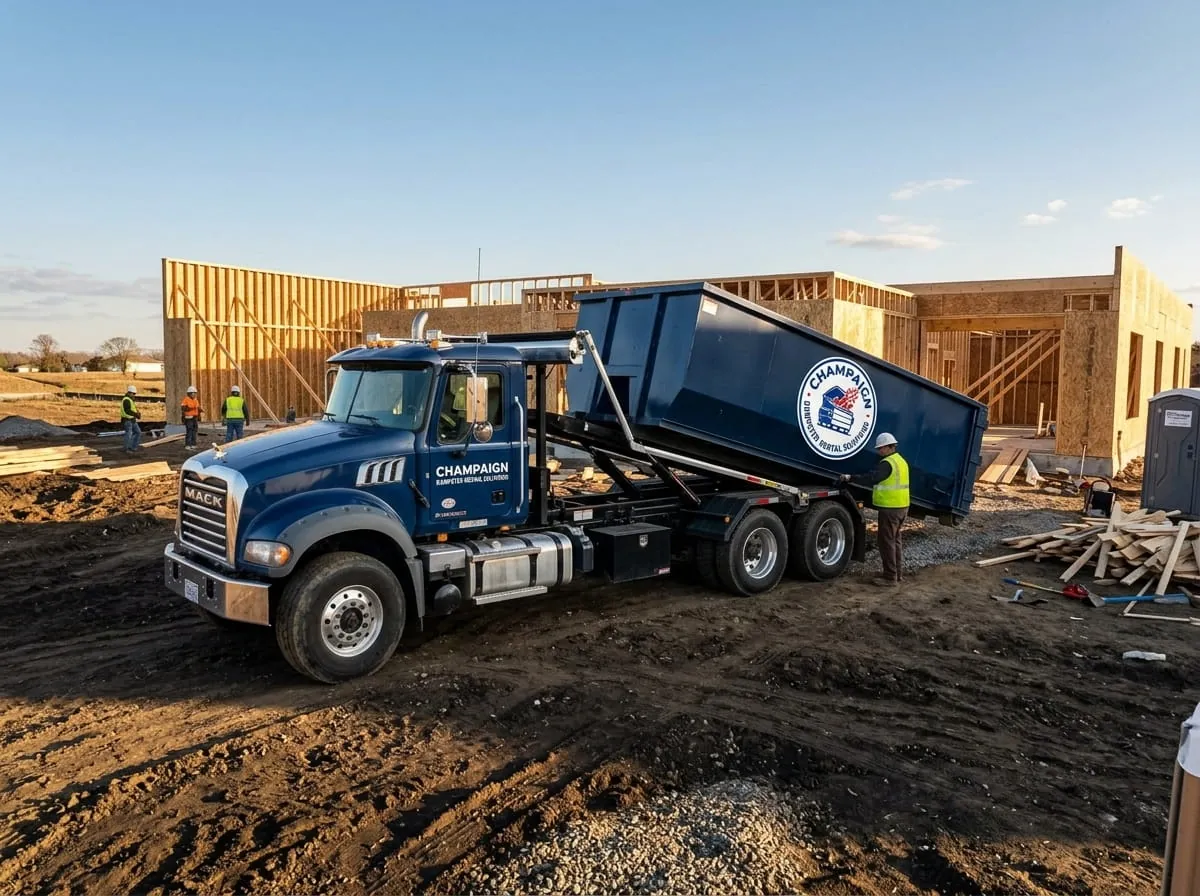
Flat ground, no shelter
East-central Illinois is about as flat and open as land gets. There is no ridge to break the wind and no valley to funnel it - just section after section of tile-drained farm ground with towns set into it.
What that means for severe weather is straightforward: when wind arrives, it arrives everywhere at once and with nothing in the way. A line of storms crossing this county can take limbs off mature trees across whole neighborhoods in twenty minutes, and a derecho or a tornado track will do considerably worse over a much narrower path.
The mature street trees that make Champaign and Urbana pleasant places to live are also the thing that comes down. Silver maples in particular shed large limbs in high wind, and there are a great many of them in the older neighborhoods.
The cleanup problem is therefore a volume problem, arriving suddenly, across a lot of properties simultaneously.
⚠️ Photograph everything before you touch it
The most expensive mistake people make after a storm, and it is entirely avoidable.
Once debris is in a container it is gone, and an adjuster cannot assess what they cannot see. Two specific traps:
- Roof damage is easy to miss and easy to destroy. If a limb hit the roof, the shingle damage matters as much as the limb - photograph it from the ground with a zoom before anyone gets up there.
- Fence and outbuilding damage gets cleared first because it is the most annoying, and it is also frequently covered.
Emergency work to prevent further damage - tarping a roof, clearing a limb off a car - is normally fine to do immediately. Keep the receipts and photograph that too.
Structure damage is an insurance job
If a tree came through the roof or a wall, or if the building is compromised, stop and let the process work.
- Do not demolish anything until the adjuster has been.
- Do not enter a damaged structure to retrieve possessions if there is any doubt about it.
- Demolition of a damaged building generally needs a permit, and often carries asbestos conditions on anything predating 1980.
- The debris from a structure is not the same stream as tree debris, and mixing them makes a cheap load into an expensive one.
We will happily stage containers around an adjuster's timetable rather than yours. Tell us the situation and we will work with it.
Tree debris is the bulk of it
For most properties, most of the time, the storm problem is wood.
Some practical realities:
- Cut it down before loading. A tree loaded whole takes three or four times the space it needs to. Cutting to rough container length is the single biggest saving available.
- Green wood is heavy. Freshly downed timber is full of water and weighs far more than seasoned wood. A container of green limb wood reaches its weight allowance faster than people expect.
- Stumps and root balls are dense and awkward. They go in, but tell us in advance so we bring the right box.
- Keep soil out, particularly off a root ball. Soil is among the heaviest material there is.
- Watch for embedded metal - fence wire grown into a trunk, old clothesline hardware. It matters at the processing end.
A note on the free routes: the City's seasonal collection takes branches up to 2 inches in diameter and 3½ feet long, bundled. After a storm, almost nothing qualifies. The Landscape Recycling Center in Urbana takes woody material year round for a fee, which works if you can haul it.
⚠️ You cannot burn it in the cities
Historically, a storm pile got burned. That route is closed for a lot of this county.
Burning is prohibited in Champaign and Urbana, and within 1,000 feet of those city boundaries. Some unincorporated areas and communities including Savoy do permit it, under real conditions - the full picture is here.
Two things worth adding in a storm context specifically:
- A thousand feet is measured from the city boundary, not from the built-up area, and plenty of people just outside the limit sign are still inside the ring.
- Storm debris is frequently mixed. Even where burning landscape waste is allowed, a pile containing fence panels, shingles, siding or treated timber is not a landscape waste pile any more.
Sizing after a storm
- Limbs and brush from one large tree: 20 yard, cut down before loading
- A whole mature tree down: 30 yard, and possibly a swap
- Stumps and root balls: tell us first - dense, awkward, and they change the box
- Fence line destroyed: 20 yard - treated posts, panels, wire and concrete footings, all mixed
- Shingle damage and a partial re-roof: 20 yard, weight-aware
- Outbuilding or shed flattened: 20 or 30 yard depending on construction
- Whole-property cleanup after a tornado track: 30 yard with swaps, staged around the adjuster
- Anything with soil or concrete footings: a separate small container
Why containers run short after an event
Worth understanding so the timing does not come as a shock.
A severe weather event damages a lot of properties in one night. The next morning, a large number of people all call a small number of local operators at the same time. Every container in the county is spoken for within hours, and the trucks are then running full days for a week or more.
What helps:
- Call early rather than waiting until the pile is finished. We can book you a slot before you have finished cutting.
- Be flexible on size. A 20 yard tomorrow beats a 30 yard next week.
- Stage the work. Clear what is dangerous or blocking access first, then the bulk.
- Tell us if there is a safety issue - a limb on a car, a blocked exit, a damaged service. Those go to the front.
And be skeptical of anyone who turns up door-to-door with a truck and no local address after a storm. Storm chasing is a real problem in this region. Ask who they are, where they are based, and whether they hold a City hauler license.
A storm-cleanup checklist
- Photograph everything before anything moves
- Call your insurer before you clear
- Emergency protective work is fine - document it and keep receipts
- Do not demolish damaged structure until the adjuster has been
- Book a container early, before the pile is finished
- Cut trees down before loading - it saves three quarters of the space
- Green wood is heavy; keep soil off root balls
- ⚠️ No burning in the cities or within 1,000 feet of them
- Keep structure debris separate from tree debris
- Check credentials on anyone who turns up uninvited
Need a container in Champaign?
Call and describe the job. Three minutes on the phone gets you a size recommendation, a flat rate and a delivery window — and we will tell you if a smaller, cheaper container is the right answer.
Call (217) 207-3185