
Cleanouts
The Two Weeks That Move More Furniture Than the Rest of the Year
Every container in this county is spoken for in the second week of May. Landlords who book in March pay less and sleep better.
Why this market has a season
Most dumpster markets have a gentle seasonal curve. This one has a cliff.
The University of Illinois sits across Champaign and Urbana, and the rental stock built around it turns over on an academic calendar rather than a domestic one. In practice that means an enormous volume of furniture and household goods leaving rental property in a very compressed window in May, and a second, smaller one in August.
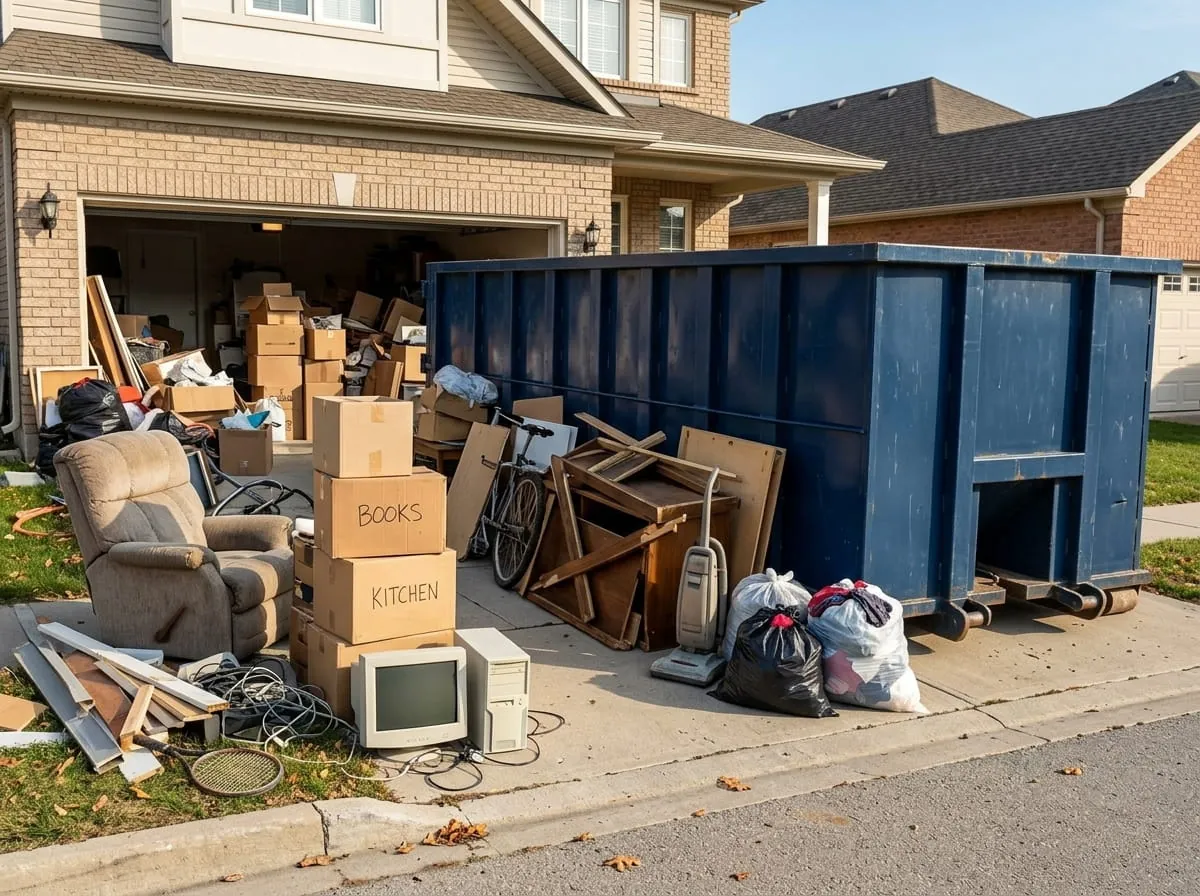
Nothing about that is gradual. Leases end on the same dates, buildings empty in the same week, and the material - futons, desks, mattresses, shelving, mini-fridges, rugs, and a startling quantity of perfectly good kitchenware - all needs to be gone before the cleaners and painters arrive.
If you own, manage or maintain rental property here, this is the fortnight your year turns on.
⚠️ Book before the calendar turns
The single most useful thing on this page.
What that means practically:
- March is not early for a May turnover. It is about right.
- Book the swap at the same time as the delivery. On a multi-unit turnover you will need one, and the swap slot is harder to find than the drop.
- Tell us the lease end date, not the date you would like the box. We will work backwards and tell you honestly whether it is achievable.
- A single day of slack is worth a great deal in that week. If you can take delivery the day before rather than the morning of, take it.
We would far rather turn down work in March than let somebody down in May, so if the week you want is full we will say so.
What actually comes out of a student unit
Worth knowing because it sizes very differently from a family house clearance.
It is bulky and light, almost without exception:
- Futons, couches and papasan chairs - enormous volume, very little weight
- Flat-pack furniture, usually beyond reassembly by year three
- Mattresses and bed frames
- Rugs and carpet remnants
- Shelving, desks, chairs
- Mini-fridges and microwaves
- Bagged clothing, bedding and kitchenware
- A genuinely surprising amount of unopened food
Because it is bulky and light, volume binds long before weight. That is the opposite of a renovation or a landscaping job, and it means you size up rather than down.
The exception: if the turnover includes any actual repair work - flooring, drywall, cabinetry - the weight picture changes completely and that material should ideally go in its own container.
Sizing a turnover
- A single studio or one-bed unit: 10 or 15 yard
- A shared house, three to five bedrooms: 20 yard
- A shared house where nobody took anything home: 30 yard
- Four to six units in one building: 30 yard with a swap booked
- A whole small building: 30 yard and plan for two or three pulls
- Turnover plus flooring replacement: a 20 yard for contents, a 10 yard for the flooring - keeping them apart is cheaper than mixing them
- Annual furniture refresh across a portfolio: phased swaps rather than one enormous box
The most common mistake we see is a landlord ordering one 20 yard for a five-bedroom house and discovering on day two that the futons alone took half of it.
⚠️ Access near campus
The campus edge is the tightest working environment in this county, and it is worth thinking about before delivery day rather than on it.
- Street parking is contested and often metered or permit-controlled. A container occupying spaces may need permission from the relevant city - and Champaign and Urbana are different cities with different rules. Ask us and we will point you at the right office.
- Alley access is common and frequently the best answer, but alleys are narrow, and one badly parked car blocks the whole run.
- Driveways near campus are short, often shared, and sometimes serve several units.
- Overhead wires and mature street trees are a real constraint. We need roughly twenty-two feet of clear height to raise the bed - and on a job with a mid-course swap, it has to work twice.
- Tell us which city the property is in. The twin cities run their waste arrangements differently and the boundary is not obvious on the ground.
Where access is genuinely tight, a 15 yard with a swap beats a 20 yard that cannot be placed.
Donation beats disposal, if you plan it
A lot of what comes out of student housing in May is serviceable, and the volume is large enough that diverting even part of it makes a real difference to what you pay.
Worth separating before loading:
- Usable furniture - if it survived the year, somebody will take it
- Unopened food - genuinely significant quantities, and it has an obvious destination
- Clothing and bedding
- Working small appliances
- Cardboard - which on a turnover is a huge share of the volume, and goes in the property's recycling. On a one-to-four unit residence in Champaign that collection is already included in the trash service at no extra cost.
- Scrap metal - bed frames and shelving have real value
Doing this properly needs a plan made in April, not a decision made at 8 p.m. on the day the keys are due back.
What cannot go in
Student units produce a specific and predictable set of prohibited items:
- Mini-fridges. The most common single problem. They hold refrigerant and cannot go in a container unless professionally evacuated - and in a big turnover there may be a dozen.
- Batteries of every kind, including inside power banks, vapes and small electronics - a genuine fire risk in a loaded container.
- Aerosols and any pressurised cylinder.
- Paint, solvents and cleaning chemicals left under sinks.
- Electronics - not prohibited but worth handling separately where there is a take-back option.
- Tires.
Walk every unit for those before the container arrives. Once a futon is on top of a mini-fridge, nobody is finding it.
A turnover timeline
- March: book the container and the swap for May. Confirm lease end dates
- April: arrange donation collection; tell tenants what to leave and what to take
- Two weeks out: confirm placement, check overhead clearance, sort street permission if the container is going in the roadway
- Week of: walk every unit for mini-fridges, batteries, aerosols and chemicals
- Delivery day: boards go down as standard; point us at the strongest part of the drive
- Loading: flat and heavy first, break down flat-pack, stop at the fill line
- Mid-job: call for the swap before the box is full, not after
- After: sweep the drive and the alley - turnover sheds more small debris than people expect
Need a container in Champaign?
Call and describe the job. Three minutes on the phone gets you a size recommendation, a flat rate and a delivery window — and we will tell you if a smaller, cheaper container is the right answer.
Call (217) 207-3185